12 Indoor Dog Enrichment Games: Steps and Safety
Start with one easy sniffing game, food puzzle or shared activity. Use a clear space with secure footing, stay nearby, and let your dog choose whether to participate. The ideas below explain how to begin and make each task easier.
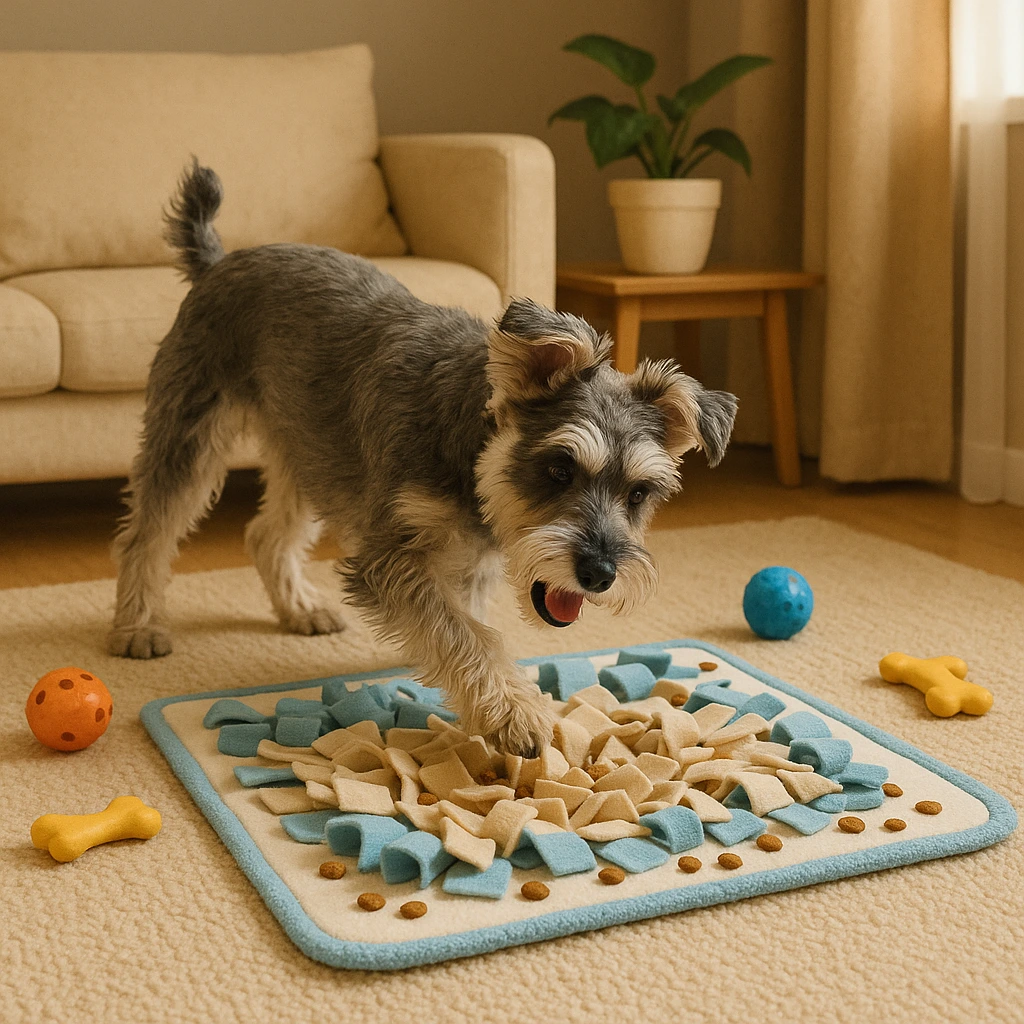
VCA's enrichment guidance describes opportunities for sniffing, foraging, play and other natural behaviors. These activities can add variety to a dog's day, but no game guarantees calmer behavior or treats an anxiety disorder.
Choose a Starting Game from What You Observe
| What you notice | Try first | Keep it approachable |
|---|---|---|
| Investigates food with their nose | Visible scatter search | Small search area with easy rewards |
| Enjoys nudging objects | Open food puzzle | Uncovered compartments before moving parts |
| Brings you a toy | Two-toy swap or short roll | One voluntary exchange before repeating |
| Hesitates around unfamiliar objects | Hand target or visible toy search | Familiar room and no hidden obstacles |
Dogality labels can be a prompt for noticing preferences, but they do not determine which game is suitable. Watch the dog in front of you. If they have pain, mobility limits or a history of swallowing objects, ask your veterinarian which activities and materials are appropriate.
Sniffing and Searching: Games 1–4
1. Visible Scatter Search
Place a few pieces of your dog's usual food on a clean, non-slip surface while they watch, then invite them to find it. Start within a small area. Make it easier by pointing to a piece; expand the area only after comfortable success.
2. Find the Familiar Toy
Place a favorite toy in plain view nearby. Invite your dog to find it, then reward interest with play or praise. Later, partly hide it beside an object at floor level. Return to a visible placement if searching stalls.
3. Short Food Trail
Lay a short line of food pieces across one clear room. Let your dog follow at their own pace. Begin with pieces close together; increase spacing gradually. Keep the trail away from stairs, doorways and another pet's resting area.
4. Easy Human Hide-and-Seek
Have a helper stay with your dog while you move just beyond an open doorway, then call once. Reward finding you. Begin where you are partly visible and stop if your dog seems worried. Never trap or shut them away to start the game.
Food Puzzles: Games 5–8
Use food already permitted in your dog's diet and set aside the portion before playing. VCA's activity-toy guidance recommends introducing accessible food rewards and considering ingredient suitability. Making a reward harder to reach is not automatically better.
5. Beginner Snuffle Mat
Put food on top of a suitable mat before tucking a few pieces shallowly between folds. Stay close enough to observe how your dog uses it. Stop if sniffing turns into tearing or eating fabric; use the visible scatter game instead.
6. Open Muffin-Tin Search
Place small food portions in uncovered wells of a clean, smooth muffin tin on secure footing. Let your dog explore. Keep wells open rather than adding loose balls or small covers; switch to a shallow plate if the tin is awkward to access.
7. Easy Fillable Food Toy
Choose a dog-designed food toy in a suitable size and place a little usual food near its opening. Begin with easy access rather than tightly packed or frozen contents. Follow the maker's instructions and remove the toy if your dog damages it.
8. Loose Towel Fold
Only try this with a dog that does not chew or swallow fabric. Place food beneath one loose fold of a clean towel; show the edge of a reward first. Supervise throughout, avoid knots, and stop at any fabric chewing.
Food taken from the measured meal portion stays within that portion. Additional treats count toward the day's extras. For healthy adult dogs, our calorie and treat calculator helps subtract extras before measuring main food; it does not set puppy or medical-diet targets.
Shared Play and Skills: Games 9–12
9. Hand Target
Offer an open hand near your dog's nose without pushing it toward them. Reward a voluntary nose touch. Repeat a few easy attempts, then move your hand slightly. If your dog backs away, give space and choose a different activity.
10. Two-Toy Swap
Use two familiar, suitable toys. When your dog carries one, offer the other and reward a voluntary release with play. Start without throwing. Avoid reaching into their mouth or forcing an exchange; skip this game if they guard toys.
11. Short Floor-Level Retrieve
Roll a suitable toy a short distance on a clear, non-slip floor. Invite a return and reward bringing it back. Start nearby and keep the toy on the floor. Switch games if your dog slips, repeatedly skids or becomes too excited.
12. Wide Floor-Level Weave
Place two stable objects far apart and invite a slow walk between them. Begin with one wide turn and reward completion. Keep the route flat and clear, without poles to jump over. Choose a stationary search if turning is uncomfortable.
Adjust One Thing at a Time
- Start easy: visible food, a nearby toy or one simple action.
- Look for voluntary engagement: your dog explores and can access the reward without tearing apart the setup.
- Change one feature: a slightly wider search area or one extra step, rather than hiding more and adding obstacles together.
- Pause when needed: stop if your dog disengages, becomes frustrated, slips, guards items or starts chewing the equipment.
Try a few easy rounds first. Note the game, setup and response so you can repeat a successful version. There is no fixed session length that suits every dog; do not keep going just to reach a minute target.
Safety and Clean-up
VCA's chew-toy safety advice warns about choking, swallowed pieces and tooth damage from very hard items, including large ice cubes. Choose suitable sizes, inspect for damage and replace worn toys. Household materials are not automatically suitable chew toys.
- Keep the games on one floor, with clear space and secure footing. Avoid stair chases, high throws and improvised jumps.
- Supervise these setups. Skip fabric and loose household parts for dogs that ingest them; a person nearby cannot make every material safe.
- Give pets separate play spaces if food or toys cause competition. Do not force an item from a guarding dog's mouth.
- Wash food-contact items after use according to their instructions, dry them and put them away. Follow fabric care labels rather than a universal hot-wash rule.
This guide focuses on what to do with a suitable setup. For choosing equipment, see our dog toy selection guide. For distress linked to being left alone, see separation anxiety signs and first steps and seek professional guidance.
FAQs
Do I need to buy a puzzle toy?
No. A visible search, hand target or familiar-toy game needs little equipment. Choose materials your dog can use appropriately rather than assuming every DIY option is suitable.
What if my dog ignores the game?
Offer an easier version or a different activity and let them opt out. Check the reward and setting. Ask your veterinarian about a sudden change in interest, especially alongside discomfort or appetite changes.
Can indoor games replace walks?
Plan enrichment alongside toilet access and appropriate physical activity. If outdoor activity is restricted because of illness or recovery, ask your veterinarian which indoor options fit those restrictions.
Editorial note: This update was prepared with AI assistance using the veterinary sources linked above. The activities have not been individually tested by the Dogality Test Team or reviewed by a veterinarian.