Dog Toys by Play Style: How to Choose
Start with what your dog actually does during play. A dog that enjoys searching may like a simple food puzzle; a dog that brings toys to you may prefer a shared fetch or tug game. Check size, material, and how your dog handles the toy before deciding it belongs in their routine.
This guide compares types of toys and offers a way to try them. It is not a product ranking or a claim that a personality label predicts the right purchase. The RSPCA's home-environment guidance recommends suitable toys for physical activity, mental stimulation, and interaction.
For Dogs That Enjoy Sniffing and Puzzles
Try this category if your dog spends time investigating where a reward is hidden or nudges objects to uncover it. Quiet behavior alone does not tell you whether a dog will enjoy a puzzle.
- Simple food puzzles: begin with an easy opening or uncovered compartment so the dog can reach the reward without needing to break the toy.
- Snuffle mats: consider one for a dog that searches with their nose. Put it away if they start tearing or eating the fabric.
- Fillable rubber toys: choose a suitable size and material; start with food that is easy to reach rather than making the first attempt difficult.
Use food already permitted in your dog's diet and count it within their daily allowance. Our human-food ingredient and portion guide explains checks to make before choosing a filling. A toy does not make an unsuitable ingredient safe.
For Dogs That Enjoy Chasing and Fetch
Look for interest in following a moving toy and bringing it back, rather than assuming every energetic dog wants repeated throws. Try a short, low throw or roll in a clear area with secure footing.
- Dog-designed retrieval toys: check the maker's sizing guidance and whether your dog can carry and release the item comfortably.
- Soft retrieval toys: an option to try for a dog that likes carrying; remove them if carrying turns into shredding.
- A shared search game: place the toy nearby and let your dog find it if chasing is less appealing than searching.
Blue Cross's play guide recommends trying different games and using appropriately sized toys. It cautions against throwing toys upward in a way that encourages an awkward landing. Let your dog's willingness to rejoin guide the session, rather than aiming to exhaust them.
For Dogs That Prefer Gentle, Quiet Play
If a dog backs away from noise or fast movement, offer a quieter option and let them approach at their own pace. Do not use a squeaker or repeated movement to force interest.
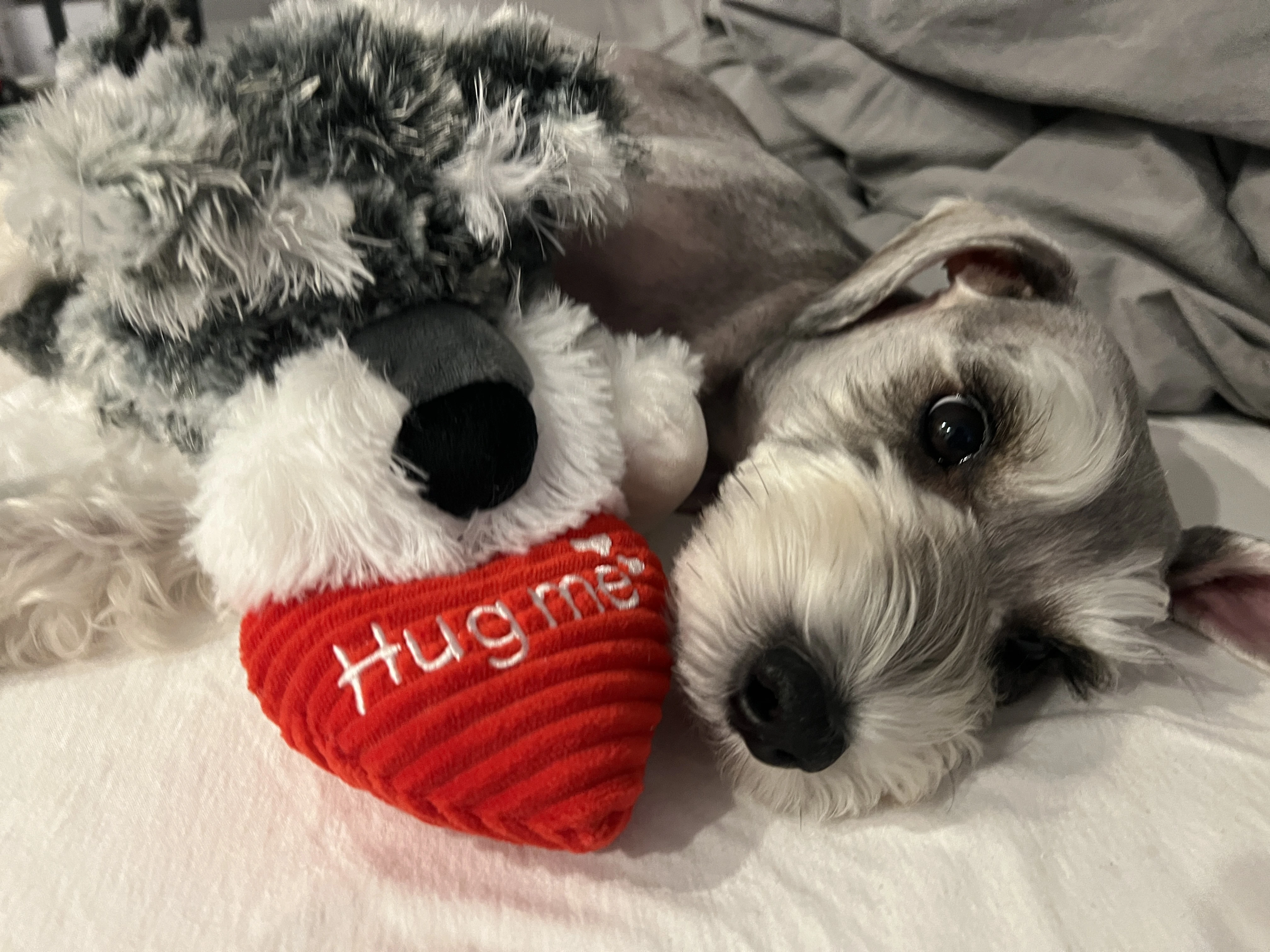
- Quiet plush toys: consider them for gentle carrying or short shared games, with supervision and intact seams.
- Easy puzzles: keep the first reward accessible and simplify the task if the dog disengages or tries to chew through the container.
- A familiar toy: try it in a quieter space before buying something new.
Softness does not establish safety or make a toy a treatment for anxiety. For help noticing discomfort, see our dog body-language guide. A dog can choose to rest instead of playing.
For Dogs That Enjoy Shared Play and Tug
Bringing you a toy or returning for another round gives you a practical reason to try an interactive game. The RSPCA guidance linked above identifies shared play, including tug, as a way to spend time together.
- A purpose-made tug toy: choose one you and your dog can hold comfortably; keep the game gentle and pause when either of you needs a break.
- A retrieval toy: try a short return-and-release game rather than chasing the dog to recover it.
- A search toy: take turns placing and finding it for a slower shared activity.
Shared play need not involve several dogs competing for one item. The RSPCA recommends enough resources for each dog to reduce competition. If a dog stiffens or guards a toy, give them space rather than prying it from their mouth, and seek qualified help for repeated guarding.
Check Toy Size, Material, and Condition
Size: Avoid Items That Can Be Swallowed
Read the manufacturer's size and use instructions alongside your observations of the dog. Avoid toys or detachable parts that can be swallowed. There is no universal “back molars” measurement that establishes safety for every toy. Blue Cross advises checking for small parts that can be chewed off; supervise new toys and stop if pieces come loose.
Material: Tougher Is Not Always Safer
In Cornell's chew-safety guidance, veterinarian Brian Collins discourages bones, antlers, hooves, and other hard or abrasive objects. He suggests chew items that bend and can be indented with a fingernail. That is a screening guideline, not a guarantee: a flexible toy can still be torn apart and swallowed.
Condition: Inspect Before Each Session
- Look for cracks, open seams, loose squeakers, or missing chunks.
- Stop using a toy with exposed stuffing or unraveling rope fibers.
- Clean and dry reusable toys according to the manufacturer's instructions, especially after adding food.
- Reconsider size and condition as a puppy grows or a dog's chewing behavior changes.
If you think your dog swallowed a toy or pieces of one, contact your veterinarian promptly. Cornell's foreign-body guide explains that toys can cause intestinal obstruction and string-like material can cause severe injury. Vomiting, appetite loss, abdominal pain, or lethargy need veterinary attention. Trouble breathing requires immediate emergency care.
Try, Observe, and Rotate Before Buying More
Use this practical comparison routine with toys you already have that pass the safety checks:
- Offer one option. Start in a familiar space with a simple version of the activity.
- Watch how it is used. Note searching, carrying, chasing, shared play, or attempts to dismantle it.
- Record whether the dog returns voluntarily. Interest, disengagement, and damage tell you more than the label on the packaging.
- Change one feature. Try a quieter toy, easier puzzle, or slower game before purchasing a whole set.
For example, a dog that abandons a puzzle may need an easier opening, while a dog that tears a plush toy should not be given the same toy for unsupervised comfort. There is no fixed number of toys or weekly rotation schedule that prevents boredom for every dog. Rotate based on interest and condition, keeping a familiar favorite available when appropriate.
The Dogality questionnaire can organize your observations of behavior. Use its result as a starting point for trying activities; it does not determine toy safety or guarantee a preference.
FAQ: Choosing Dog Toys
What toy should I try first?
Start with an activity your dog already chooses:
searching, carrying, chasing, or playing with you. Choose a suitable size and material, then observe a short session.
Are squeaky toys safe?
A squeaker is a removable part if the toy breaks open.
Supervise play and retire damaged toys. Choose a quiet alternative if the sound makes your dog uncomfortable.
What if my dog destroys every toy?
Do not keep moving toward harder materials.
Stop when parts detach and discuss suitable options with your veterinarian, especially if your dog swallows pieces.
Can I leave a puzzle toy with my dog alone?
Supervised success does not guarantee
unattended safety. Follow the maker's intended use and account for chewing or swallowing behavior;
keep new or easily damaged items for supervised sessions.