Create a Petio: Dog-Friendly Patio and Balcony Planning
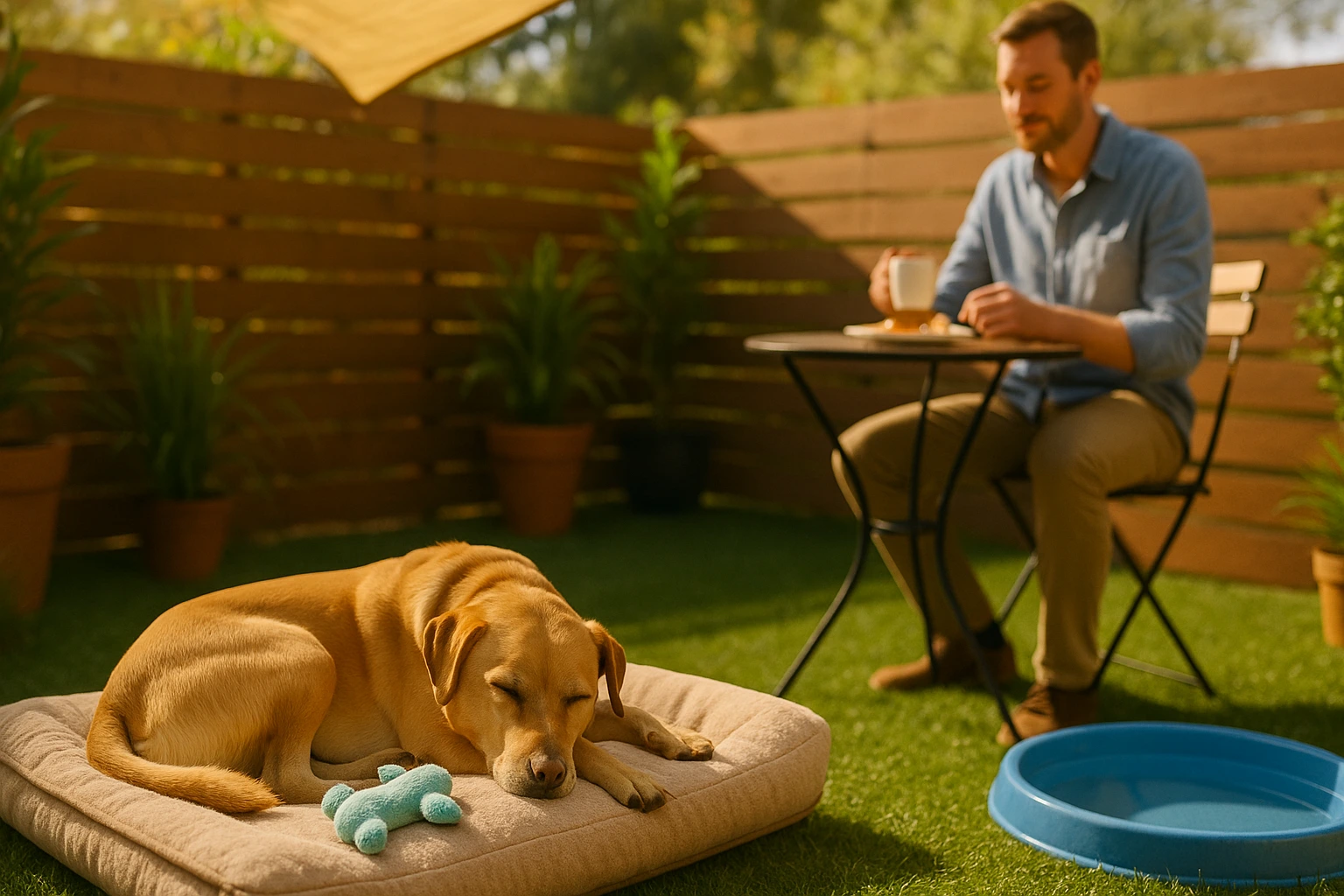
A “petio” is an outdoor patio area arranged for time with your pet. For a dog, start with secure boundaries, a comfortable surface, shade, fresh water and an easy route back inside. Add toys and planting after those basics are in place.
A ground-level patio and an elevated balcony need different plans. A turf rug and portable fence do not make a balcony safe. Use this guide to decide what your space needs before buying decor; outdoor lounging should complement your dog's walks and play.
Check the Space Before You Buy Anything
Walk the area without your dog first. Check doors, gates, railings, gaps, damaged surfaces and anything a dog could climb or chew. Choose the layout around your dog's observed behavior: a digger, climber or persistent chewer needs different precautions.
| Priority | What to check | Before adding features |
|---|---|---|
| Boundaries | Gaps, loose panels, gate latches and climbing routes | Resolve escape or fall risks first; no single fence height suits every dog. |
| Comfort | Shade as the sun moves, airflow and access indoors | Place the resting spot where your dog can leave the sun. |
| Surface | Heat, grip, sharp edges and drainage | Keep drains clear and remove damaged or loose materials. |
| Water | A stable bowl within reach | Use fresh drinking water, separate from any play water. |
| Storage | Plants, cleaners, fertilizers, cords and tools | Keep chewable or hazardous items out of reach. |
Balcony and Backyard Layouts Have Different Limits
Elevated balcony: prioritize fall prevention
Blue Cross's balcony guidance recommends supervising pets, moving furniture dogs could climb near the edge, and providing shade, water and access inside. It also suggests a lead for a dog's first visits to observe how they behave.
Check proposed alterations with the building manager or landlord. Have uncertain railings or barrier designs assessed by a qualified professional; do not improvise fall protection with a baby gate, loose netting or a decorative pen. Keep beds and planters away from the railing. If the fall risk cannot be resolved, choose an indoor resting spot instead.
For a compact layout, leave a clear path from the door, place a low bed in shade away from the edge, and use one supervised toy. Do not tether a dog to balcony railings or leave them outside alone.
Ground-level patio: plan around gates and cleanup
Place the rest and water area near the door, with a separate small activity zone. Inspect the full fence line, including the ground beneath it, and keep gates latched. If you add a toilet area, separate it from the bed and bowl and choose a surface you can clean without leaving standing wastewater.
A balcony is a resting area, not a dog run. Save chase games, jumping equipment and splash pools for a suitable ground-level space. Check building load limits before adding heavy planters, paving or water features to an elevated area.
Choose Flooring for Heat, Grip and Cleaning
There is no universal best patio flooring. Compare the surface you already have before replacing it. PDSA warns that artificial grass, sand and tarmac can get especially hot. Check the actual surface before your dog steps out; a green appearance does not mean it is cool.
- Existing paving or decking: check for slippery patches, splinters, cracks and exposed fixings. A secure, washable mat can provide a resting surface without a full renovation.
- Artificial turf: check heat exposure, drainage, backing and cleaning instructions for the specific product. If used as a toilet patch, make sure you can remove waste and clean underneath.
- Natural grass: plan for mud, worn patches and access for maintenance.
- Loose gravel or sand: consider whether your dog mouths or swallows loose materials. Avoid it for a dog that does; it is optional landscaping, not an essential petio feature.
Keep drainage openings accessible. Follow product instructions for cleaners and any infill; an “antimicrobial” label is not a substitute for waste removal and routine cleaning.
Check Plant Species, Not Just “Pet-Friendly” Labels
Before buying, match the botanical name to the ASPCA plant database. Common names can be ambiguous, and even non-toxic plants can cause stomach upset when eaten.
Do not assume all kitchen herbs are suitable for a dog's sniff garden. ASPCA lists lavender, oregano and garden mint as toxic to dogs. Its entry for rosemary (Rosmarinus officinalis) lists the plant as non-toxic, but that does not make it a chew toy or establish the safety of concentrated oils.
Keep plants, potting products and treatments out of reach, and follow label restrictions before allowing access to treated areas. If you suspect ingestion of a toxic plant, contact your veterinarian or animal poison service promptly; keep the plant label or a photo for identification.
Build in Stages and Budget for the Actual Space
- Measure and get permission: record dimensions, door swing, drains and shade through the day. Confirm building restrictions before attaching or installing anything.
- Resolve essential repairs: get quotes for barriers, damaged flooring or drainage work before pricing accessories.
- Start with a resting area: reuse a washable bed and bowl if appropriate. Add suitable shade without blocking the exit or creating loose cords.
- Add one activity: try a supervised sniff game or toy, then watch how your dog uses the space before buying more equipment.
- Plan maintenance: include waste bags, replacement mats and cleaning supplies in the ongoing cost.
Use a simple budget sheet with these lines: essential repairs, surface materials, shade and installation, bed and bowl, optional enrichment, and recurring cleanup. Get local prices for the measured area. A small patio using existing furniture and a balcony needing professional barrier work cannot share a reliable fixed price or completion time.
Do a Quick Check Before Each Visit
Check the gate or door, shade, surface temperature, water and any storm damage. Clear waste and loose objects. Supervise the visit, keep the route indoors open, and bring your dog in when the space becomes too hot or they appear uncomfortable. Shade and a water bowl do not guarantee protection from overheating.
AAHA lists heavy panting, weakness, disorientation, vomiting and collapse among heatstroke signs. Suspected heatstroke is an emergency: move your dog to a cool area and contact a veterinary hospital immediately.
If you use a shallow play pool in a suitable ground-level area, supervise directly and empty it after use. For more water precautions, read our dog swimming safety guide.
Petio FAQ
Can an apartment balcony become a petio?
Only if the building permits it and fall risks can be addressed. Provide shade, fresh water and supervised access indoors. If you cannot make the boundaries suitable for your dog, create an indoor nook instead.
Is artificial turf the safest flooring?
It is one option, not a safety guarantee. Check heat, drainage, grip, chewing behavior and the product's cleaning instructions before choosing it.
Can my dog stay outside while I am away?
This guide is for supervised use, and Blue Cross specifically advises against leaving pets alone on balconies. A petio setup does not replace a suitable indoor resting space.
Do I need a pool or lots of plants?
No. Start with boundaries, a comfortable resting spot, shade and drinking water. Add optional features only when they fit your space and your dog's behavior.
Related Guides
For activity ideas without more outdoor construction, try our DIY mental stimulation games. When the patio is unsuitable because of weather, use indoor dog enrichment games.
Editorial note: Updated with AI assistance using the linked sources. General planning guidance; not reviewed by a veterinarian or building professional. No materials or installations were tested for this article.