Dog Behavior on Walks: 5 Things to Observe
A walk gives you everyday examples of how your dog explores, responds to distractions, and interacts with you. Watch their pace, sniffing, check-ins, reactions, and route choices. Record what happened around each behavior before deciding what it says about their preferences.
Observe Before You Label
“Pulled toward a dog across the street” is an observation. “My dog is confident and social” is an interpretation. Keeping those separate helps you notice a pattern without treating one moment as proof of a personality trait.
Context matters when reading body language. VCA Animal Hospitals explains that stress signals can be subtle, and that behaviors such as sniffing or turning away may occur when a dog wants to avoid an interaction. Read the whole situation rather than one isolated gesture; see VCA's guide to recognizing stress.
Five Things to Observe
1. Pace and Leash Tension
Note where your dog speeds up, slows down, stops, or pulls. Does it happen throughout the walk, or only near a particular gate or another dog? Pace alone does not establish confidence, independence, or stubbornness. Write down the event first: “Leash tightened as we reached the park entrance.”
VCA recommends considering what happens before pulling and what the dog gets afterward. Moving closer to a desired destination can make pulling effective from the dog's perspective. Reward-based leash training addresses that pattern; a personality label does not replace training. See VCA's explanation of pulling on walks.
2. Sniffing and Pauses
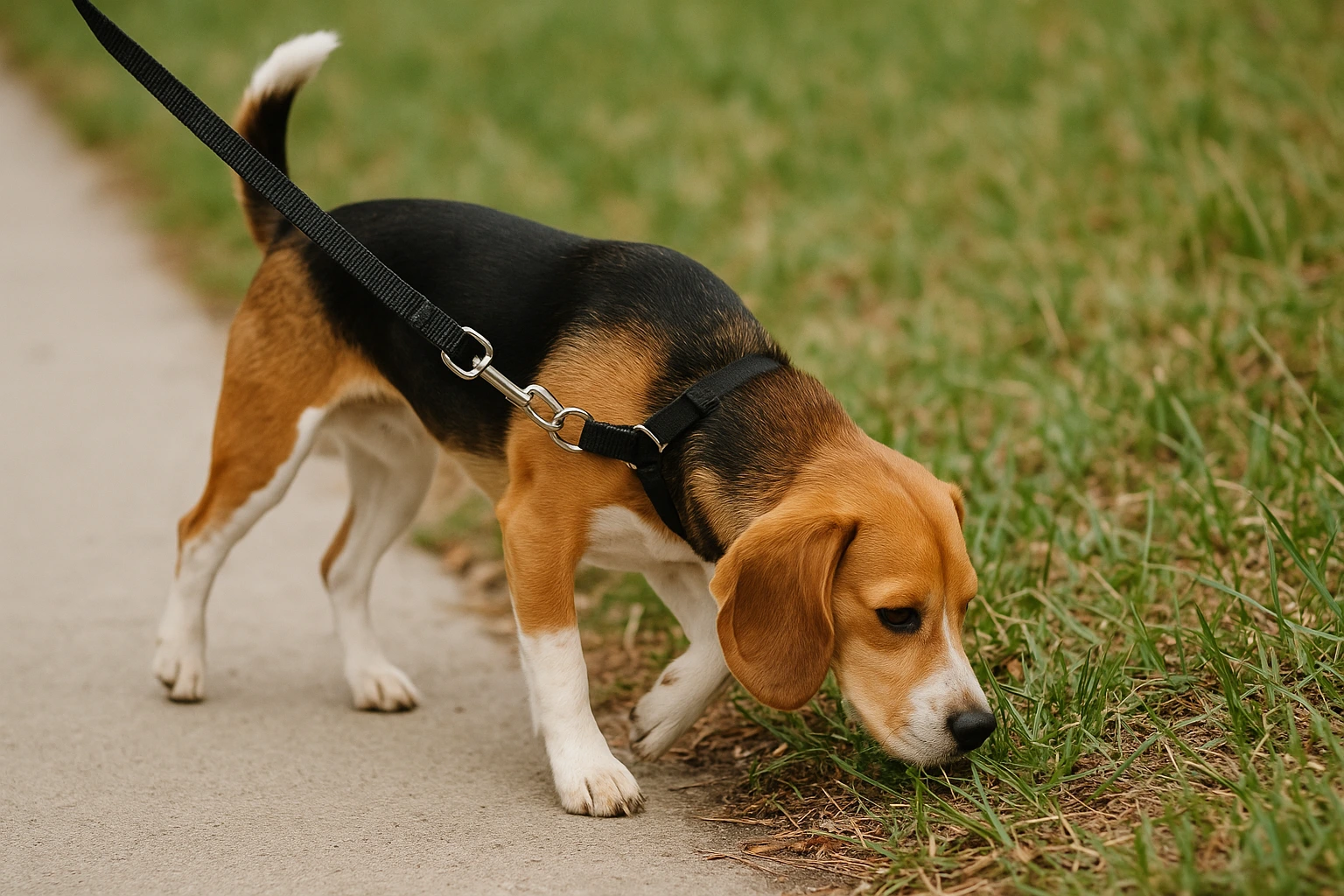
Notice where your dog chooses to sniff and whether they return to the same spots. Allowing safe exploration and sniffing is part of an enrichment walk, as described by VCA's play and exercise guide. Allow time to investigate safe areas while keeping your dog away from hazards. The length of a sniff does not assign a personality type; note what else is happening nearby.
3. Check-ins With You
Record when your dog looks back, comes alongside you, or responds to a familiar cue. Separate spontaneous check-ins from ones you ask for. Compare a quiet stretch with a distracting one before interpreting a missed cue as a preference for independence.
4. Reactions to People, Dogs, and Noise
Note what your dog noticed, roughly how far away it was, and what they did next. Barking by itself does not tell you whether they want to greet or need space. If they show signs of stress, move away to a quieter place rather than approaching to test their reaction. VCA's stress guide above recommends removing the stressor and respecting avoidance; do not force a greeting.
5. Route Choices
Watch where your dog tries to turn or hesitates. A preference for one street is worth recording, but it does not prove they are adventurous or cautious. Note whether that street leads to a familiar destination or whether something unusual is happening on the alternative route.
Compare Similar Walks
Start with a familiar route. Compare observations across several ordinary walks, noting the time, weather, nearby activity, and who held the leash. Similar situations make your notes easier to compare. You do not need to visit a busy downtown or create a challenging encounter to learn about your dog.
For example, “pulled at the same park gate on three walks” is a clearer pattern than “pulled once while a bicycle passed.” Both are useful notes, but they raise different questions about the situation. This is an observation exercise, not a validated temperament assessment.
Keep a Simple Walk Log
After the walk, choose one moment and write four short notes:
- Situation: Where were you, and what was nearby?
- Behavior: What did your dog actually do?
- Your response: Did you pause, change direction, or move farther away?
- What happened next: Did your dog resume walking, keep pulling, or continue avoiding?
An example entry: “Quiet street; bicycle passed across the road; my dog stopped and watched; we turned into a side street; they resumed walking.” Leave the interpretation open and look for repeated examples. Keep your attention on the walk; make notes afterward when it is safe.
These examples can help you answer the Dogality Test more thoughtfully. Consider them alongside your observations at home, rather than calculating a type from one walk. Our guide to the questions, scores, and results explains how the quiz uses your answers. It is a tool for fun and reflection, not a diagnosis.
When to Get Help
If your dog is frequently distressed on walks, speak with your veterinarian rather than treating the behavior as a fixed personality trait. VCA's stress guide recommends veterinary assessment for recurring stress and referral to a trainer or veterinary behaviorist when appropriate. Seek veterinary advice for a sudden change in willingness or ability to walk, especially if you suspect discomfort.
FAQ
Does pulling mean my dog is confident or independent?
No. Record what happens before and after pulling. That behavior alone is not enough to identify a personality trait.
Should I take a new route to test my dog's personality?
No. Begin with ordinary walks your dog can handle comfortably. New routes are optional, and there is no need to provoke a reaction for the quiz.
What if my dog behaves differently outside and at home?
Keep examples from both settings. When answering the quiz, use the situation described in each question instead of assuming one walk represents every part of your dog's behavior.