Does My Dog Love Me? 10 Everyday Behaviours Explained
A dog choosing to spend relaxed time beside you can be a lovely part of your bond. But a yawn, lick or excited greeting does not translate neatly into “I love you.” These ten familiar behaviours are starting points for understanding your dog, not a scientific test of affection. Look at the whole interaction, including whether your dog can choose to approach or leave.
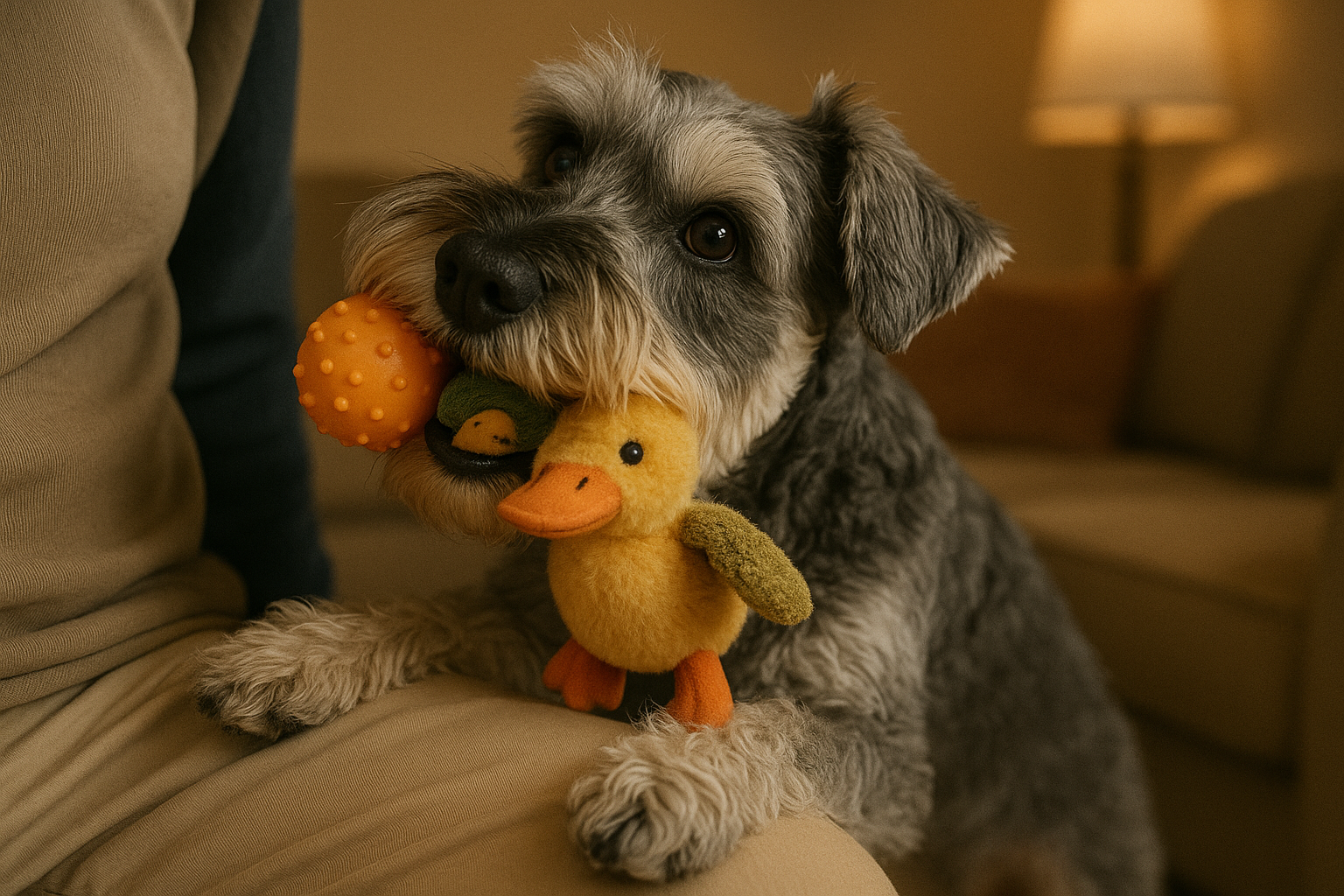
Before interpreting a gesture, ask: What just happened? Does my dog look comfortable? What happens when I pause? Dogs Trust’s body-language guide explains why context and the whole body matter. Our dog body-language guide covers those foundations; this article focuses on your everyday interactions together.
1. Looking at You: Shared Attention, with Limits
Soft, voluntary eye contact during a comfortable interaction can feel connecting. In a 2015 study of dog–owner gaze and oxytocin, researchers reported changes in urinary oxytocin associated with mutual gaze and affiliative interactions. That finding concerns bonding in the study setting; it does not measure love from a single look, establish what happens in every dog’s brain, or prove that dog and human-parent bonds are identical.
Let your dog look away. Avoid holding their face or forcing prolonged eye contact. A sustained stare with a stiff body is a different interaction from a brief look during relaxed play.
2. Yawning After You: Not an Affection Test
Dogs can catch human yawns, but that is not reliable proof of empathy or a special bond. A 2020 reanalysis of canine contagious-yawning studies found no evidence of the familiarity or prosociality biases predicted by the empathy hypothesis. This does not establish that dogs lack affection; it shows why contagious yawning is a poor shortcut for measuring it.
A yawn can also appear in an uncomfortable situation. Dogs Trust’s stress guidance lists yawning unrelated to tiredness among possible signs of worry. If your dog yawns while being held or approached, pause and offer space rather than treating it as an invitation for more contact.
3. Expressive Eyes and Brows: Read the Situation
A familiar face can draw your dog’s attention, and small facial movements are easy to notice. There is no useful at-home rule that a raised right eyebrow means love. Consider what your dog is looking at: you, a treat, the door or something unfamiliar. Avoid turning an appealing expression into a promise about how they feel.
Respond to the whole dog. If they approach comfortably, offer a familiar interaction; if they hesitate or turn away, leave room for that choice. Facial expression alone is not a reason to move closer.
4. Joining You After a Meal: Pleasant Company
When your dog finishes eating and settles nearby, enjoy the quiet company. The timing does not prove that sharing joy with you was their first instinct: a favourite resting spot, routine or expectation of another treat may also explain the visit. The useful observation is whether they choose to stay comfortably, without pressure.
Keep meals undisturbed and allow your dog to settle where they prefer. You do not need to turn every visit into petting or a cuddle.
5. Bringing a Toy: An Opportunity to Play
A toy delivery can be an invitation to interact, but it is not automatically a gift or permission to take the object. Your dog might want a chase, a tug game or simply company while carrying something. Notice what they do when you offer a game rather than reaching straight for the toy.
Use games your dog enjoys and a familiar, rewarded release cue. If they become still, tense or growl when you approach the object, stop reaching for it and seek qualified help for recurring guarding. ASPCA’s resource-guarding guidance includes toys among items dogs may guard and recommends professional help when there is a bite risk. Taking the toy to “test trust” is not a useful way to measure affection.
6. Accepting Touch: Check Whether It Is Welcome
A dog standing still while you pat their head may be enjoying it, tolerating it or feeling unsure. Stillness alone does not establish trust. Offer touch without looming over them, then pause briefly. Allow your dog to re-engage or move away instead of keeping them in place.
Watch for leaning away, turning away or tension. Dogs Trust’s illustrated body-language guide shows several ways discomfort can appear, including frozen or tense postures. A belly-up pose is not always a request for rubbing. Respecting a pause makes affection something your dog can choose.
7. Leaning Against You: Look at What Happens Next
A relaxed dog resting against your leg can be a welcome moment of closeness. Leaning is not a standalone diagnosis of security or love, though. Check whether they are resting comfortably, seeking support in a difficult situation, or trying to create distance from something nearby.
Let them shift or leave freely. If they seem worried, make the situation easier rather than adding a tight embrace. You can share space without touching.
8. Licking You: Several Possible Meanings
A lick during a friendly interaction may be part of social contact, but every lick does not have the same meaning. What happened immediately before it matters. Licking hands during restraint, for example, should not override the dog’s attempts to move away or other signs of discomfort.
If you do not want licking, gently end the contact and offer another familiar way to interact. Distinguish licking a person from repeatedly licking lips or licking a sore paw; our separate paw-licking guide addresses the latter health question.
9. Greeting You: Welcome Does Not Require Frenzy
A relaxed approach when you return can be just as meaningful as a lively greeting. Jumping or barking is not a scale of affection, and a quiet welcome is no reason to conclude your dog is less attached. Offer a greeting your dog can manage, reward comfortable contact and give them room to settle.
An intense reunion alone cannot diagnose separation anxiety. If you are concerned, look at what happens during your absence rather than judging the welcome. Our howling-when-alone guide explains how recordings can help separate noise triggers from distress.
10. Reacting to Others: Avoid Calling It Proof of Love
Barking, growling or lunging at someone approaching you should not be celebrated as a devotion test. Dogs Trust’s reactivity guidance describes fear and frustration among possible reasons for strong reactions. The label “protective” does not establish the cause or make the situation safe.
Create distance, avoid forcing introductions and get qualified support if the pattern persists or creates a bite risk. A safe bond includes helping your dog handle situations comfortably; it does not require them to confront strangers on your behalf.
How to Return Affection in Everyday Life
- Offer choices: invite contact, pause and let your dog decide whether to continue.
- Notice preferences: quiet company, a sniffing walk and a familiar game can all be ways to spend time together.
- Keep interactions predictable: use reward-based learning, comfortable routines and places to rest.
- Record patterns rather than scoring gestures: note which interactions your dog approaches, enjoys or avoids.
If your dog suddenly avoids touch, becomes unusually clingy or reacts differently, discuss the change with your veterinarian rather than assuming it reveals a change in affection. For repeated paw licking, see paw-licking causes and warning signs; for vocal communication, see understanding your dog’s bark.
Frequently Asked Questions
Does my dog need to do all ten things to love me? No. This is a guide to interpreting familiar interactions, not a checklist or ranking of attachment. Compare your dog with their own comfortable behaviour.
Does a dog that avoids cuddles dislike their owner? Avoiding one kind of contact does not establish that. Offer other ways to spend time together and respect their preferences; investigate a sudden change or signs of discomfort.
Can yawning or eye contact prove a bond? Neither is an individual affection test. The studies linked above address specific research questions, not a way to score your relationship at home.
Editorial note: This educational article was updated with AI assistance using the linked research and welfare sources. It has not been individually reviewed by a veterinarian or behaviourist.